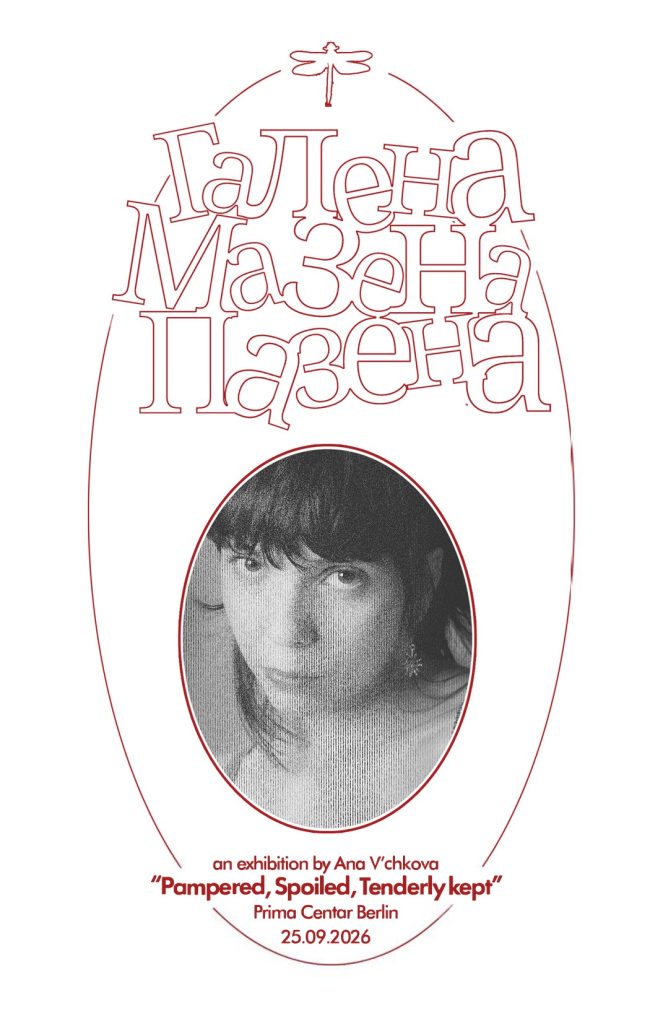
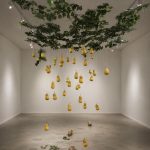
Ahead of Ana V’chkova’s upcoming solo exhibition, Pampered, Spoiled and Tenderly Kept, in collaboration with Pioneri, at CENTAR JADRO ON NOVEMBER 28, we are discussing the ideas, materials and experiences behind her work, the body as a site of intimacy, vulnerability and resistance, and how beauty and discomfort intersect in her artistic practice as well as the unexpected ways art can invite us to confront ourselves.
Artist Ana V’chkova
Interviewer Jana Garvanlieva, owner of the gallery Pioneri
Ana: It’s a gloomy and rainy day.
Jana: Yeah.
Ana: Very autumnal.
Jana: And here we are, sitting in the Pioneri gallery space, preparing for your upcoming solo exhibition, Pampered, Spoiled and Tenderly Kept, which will open on 28 November at Jadro Cultural Centre.
About two or three weeks ago, we met at your group exhibition, “Oversights” at the Faculty of Fine Arts in Skopje, where you presented a video featuring a so-called “AI girlfriend”.
When we met, I was already sitting in the Cuck Chair, watching the video, because it had caught my attention immediately.
That is why I would like to begin with the video installation, in which you use your body as a vessel to convey your messages to the audience. Could you tell me more about that?
Ana: So first and foremost, the concept of the body as a vessel has always fascinated me. Especially conceiving my own body in that way, as a complex vessel, that I am constantly relearning and relating to. It’s an ongoing love-hate relationship shaped as much by my inner world as by external influences. Every time I finally reach a place of peace with my body, my sexuality, and my physical being, the outside world steps in with unsolicited commentary.
So The Cuck Chair grew directly out of this tension, merged with the overwhelming prevalence of AI in our everyday and professional lives. I wanted to explore how the rapid rise of AI has intensified the objectification and sexualization of women, locking us into passive observation where our agency and consent are routinely bypassed.
“Cuck chair” has been a very popular term on social media for the past year.
And it basically translates to the chair in the corner of the room where someone sits, watches, and gets off on other people in a sexual act. It’s a sarcastic, dark commentary on where we are right now. And I kind of wanted to transfer that room and that feeling into an art piece. At its core, it’s about how society and as a result AI as well treats women as modular objects. It’s about the grotesque thrill of being able to rewrite, edit, and sexualize a real person’s body for a split-second desire, while the person to whom the body belongs is completely usurped and stripped of the right to say no.
Jana: It also relates to how women are portrayed through AI today. What happens when a woman sits in the cuck chair?
Women who sit in the chair get it immediately. There’s this shared breath of recognition: “This is it. This is what we face every single day.” Every woman I’ve talked to recognizes that feeling of constant scrutiny.
In the video work, I use my own body as the subject, structured like an ad for an “ideal, customizable digital sex doll”. The storyline itself is built directly from real facts: it references the actual scandal where an AI platform generated over 3 million non-consensual sexualized images in just 11 days, including thousands depicting minors. In the video, I call the tool Krok. What makes it so dark is that when the backlash happened, the immediate fix wasn’t to eliminate the feature entirely; it was simply paywalled, restricting explicit image generation to premium subscribers. That’s why at the end of the piece, when I’m fully exposed, I tell the viewer: “Subscribe to Ultra Premium Plus so we can hang out more.”
Working with our curator, Tijana, alongside the other artists, Sonja and Ivana, we decided that our descriptions wouldn’t just be standard A4 sheets of paper on a blank wall. Instead, the text had to live in the exact same narrative as the artwork itself.
For my piece, the text became the “Cuck Chair Desire Menu”. The QR codes were placed directly onto the pink plastic cuck chair, pulling from that specific pop-culture aesthetic party culture, cheap plastic, lava lamps. The entire room was designed to feel like this exotic, seductive space where consumption is built right into the environment.
Jana: And how did you create the video? Did you use AI or video-editing software?
Ana: It’s combined. Some parts are modified with AI, and other parts are purely video montage.
Jana: In this new exhibition, “Pampered, Spoiled, Tenderly Kept” you again use your body as a vessel. But before we dive into it let’s share that it first opened in Berlin, in an independent project space.
How did it feel to have your solo exhibition in Berlin? It is one of Europe’s art centers, so what did it mean to you, as a young Macedonian artist, to show your work in that context?
Ana: It was very… I don’t know. It was an exhilarating experience. I was so excited because every piece I create comes from a deeply intimate, personal place. My work always starts from a subjective experience, but my goal is to translate it into a broader, more universal language, so that anyone walking into the room can find a piece of themselves in it and truly relate to it.
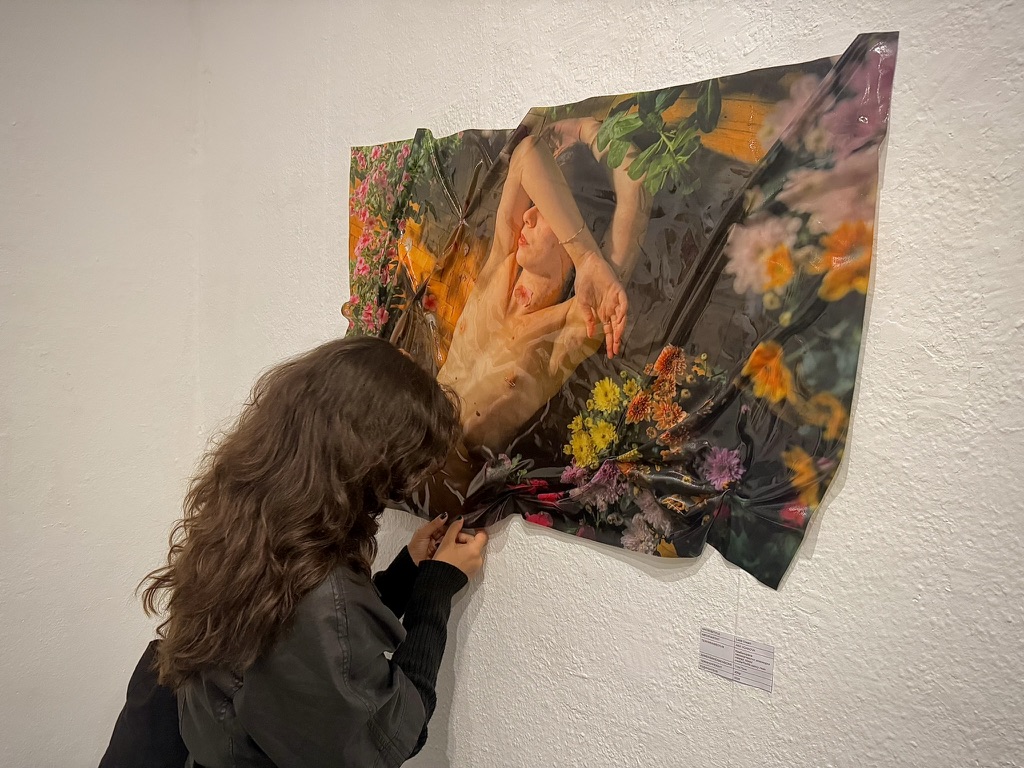
Jana: So, how did the audience respond to the pieces that were first printed as photographs and then reworked?
Ana: They’re printed on textile. On a specific textile.
Jana: Yes, and before that, the photographs were edited to distort the image of the body once again.
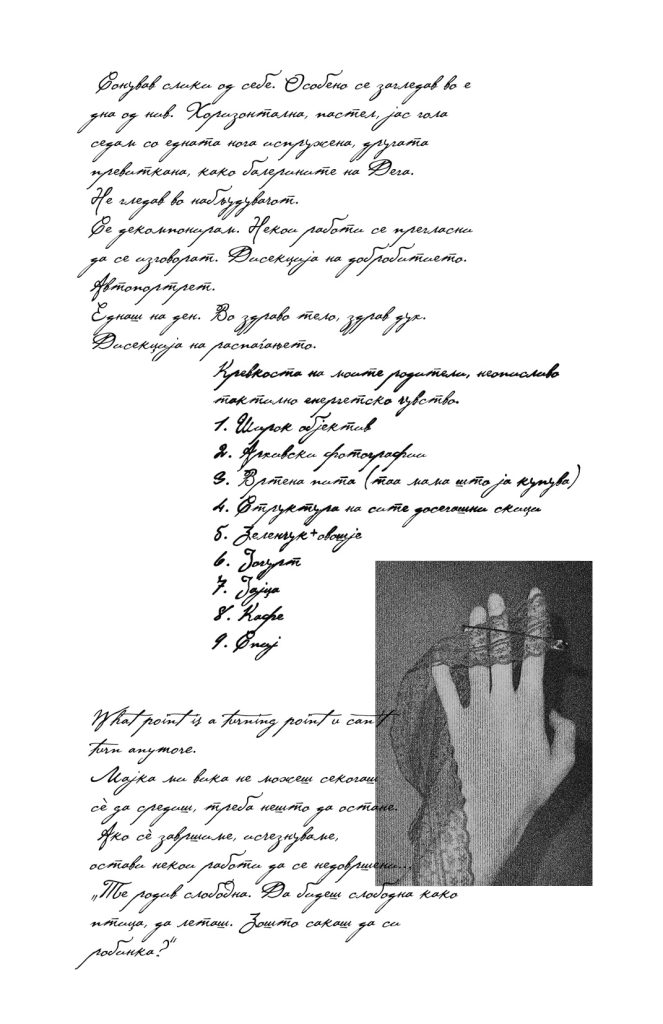
Ana: Yes.The whole project actually began in my own home. I wanted to explore the domestic space not just as a sanctuary of safety, but as a site of rebellion. Home isn’t always a comfortable place. It can be a space where you feel caught in the middle, trapped in an environment you inhabit every day, but can’t directly alter or control.
Jana: And you cannot do anything about it.
Ana: Yes, and you have to kind of find ways to deal with it.
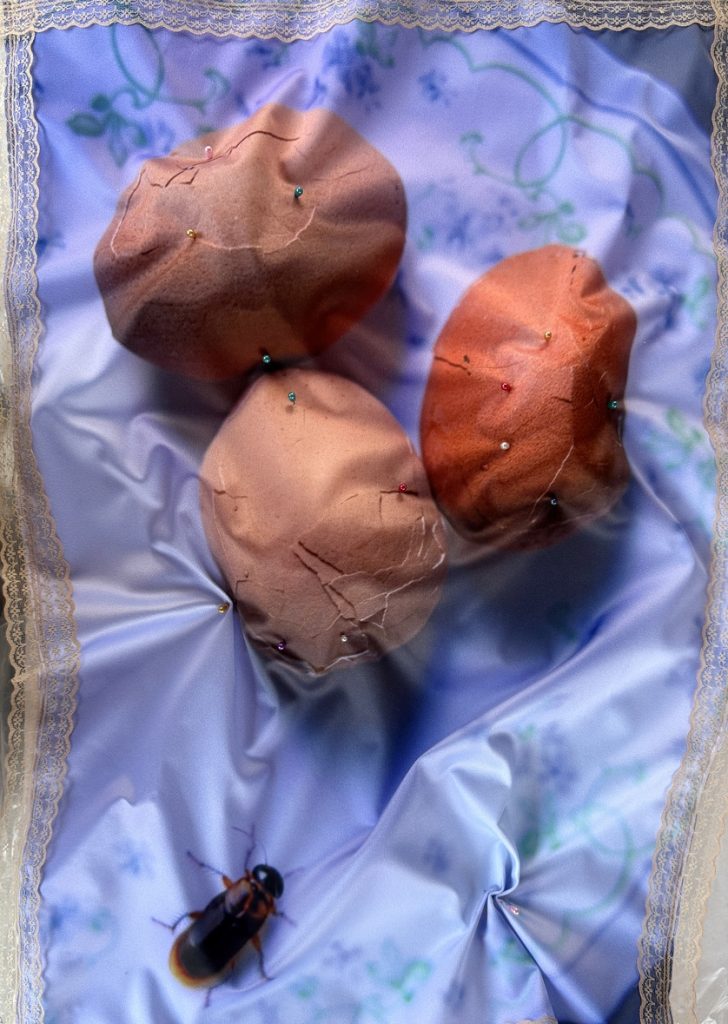
The photographs were actually a year-long project for me. I worked on sketches as daily life unfolded over time. I wanted the inanimate objects inside the home to breathe, to possess a distinct character and act as active participants alongside the body.
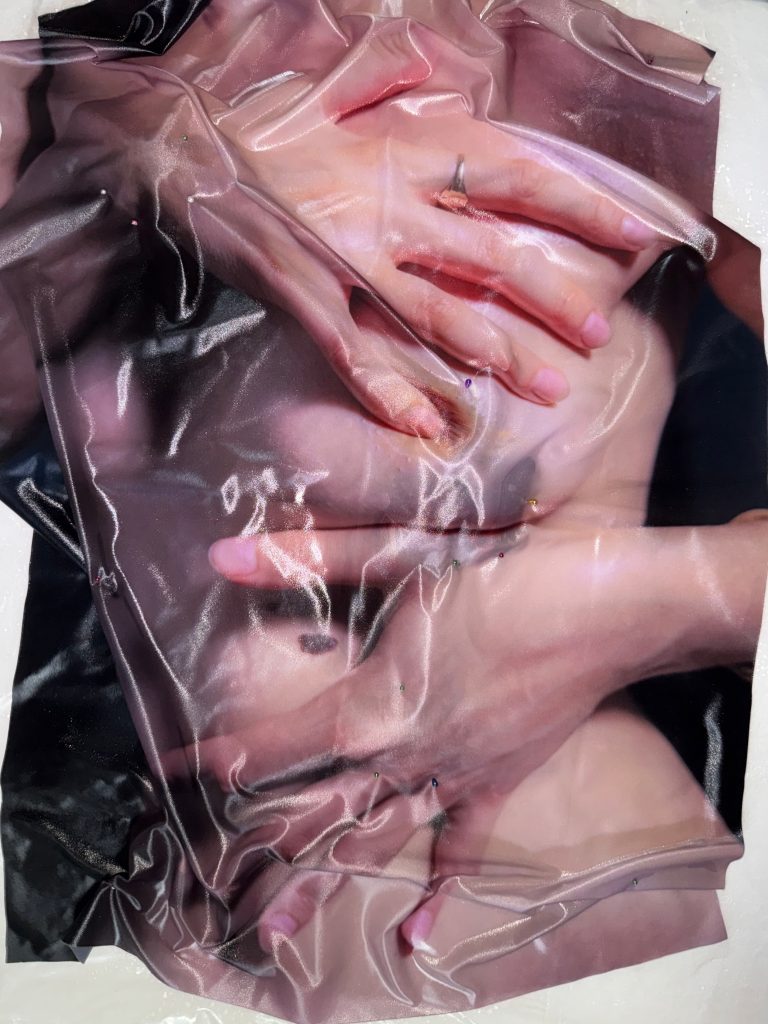
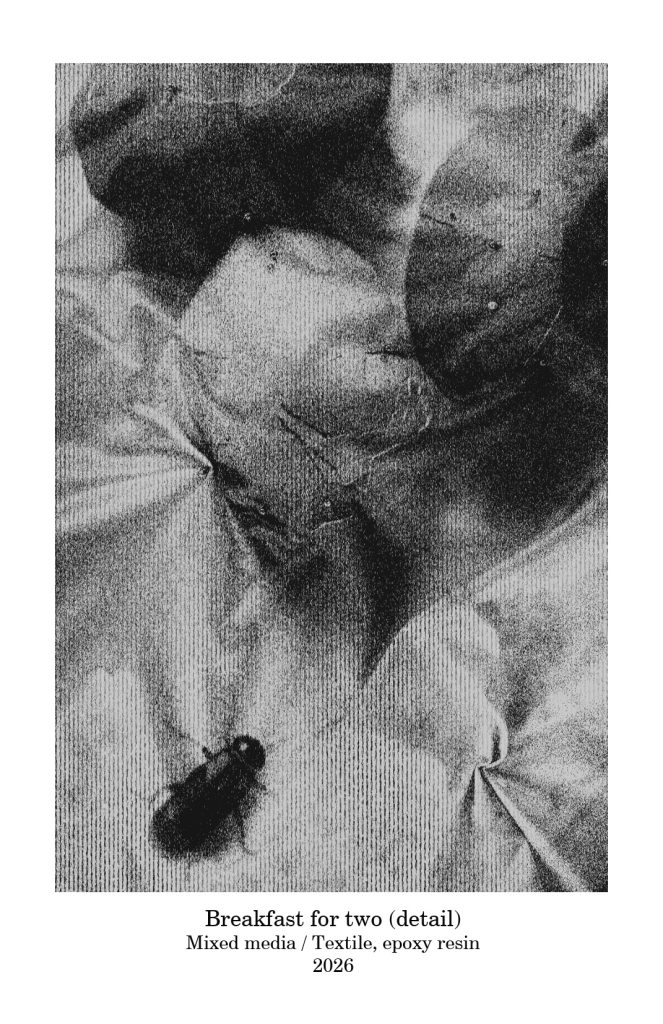
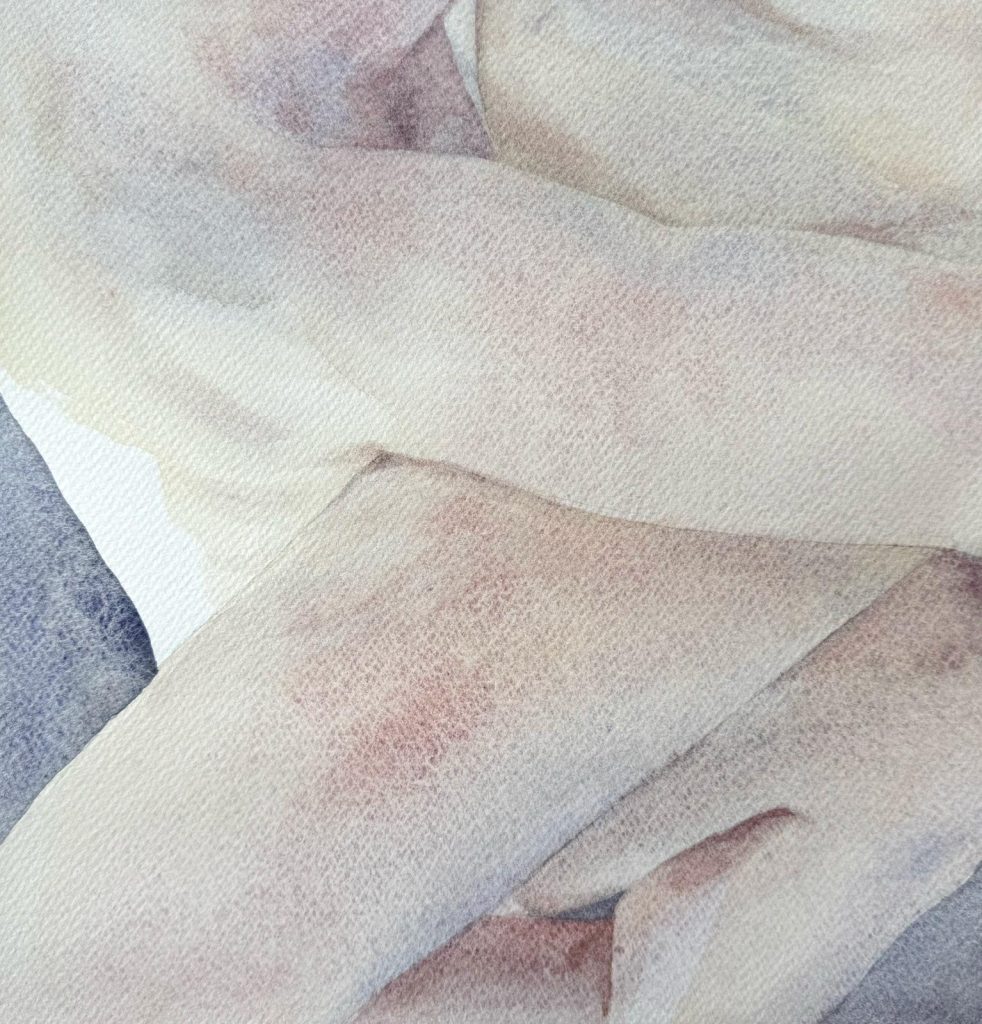
Formally, the photographs are intentionally luscious, oversaturated and rich with color. But that beauty is a hook. The scenes themselves carry an underlying friction. When you look closer, the images are deeply multilayered, pulling you past that seductive first impression into something far more complex underneath.
Jana: The texture is also very distinctive, because the photographs are not flat. They are printed on textile, so the images have a relief structure created by the fabric. How did people react when they saw, or touched, the fabric?
Ana: The photographs are printed on a specific fabric and then physically manipulated with epoxy resin to create distorted surfaces. The entire intention was to turn them into three-dimensional objects on the wall, pieces that invite you to look closely, touch them, and physically interact with their texture. When the audience arrived, I was amazed by their reaction. Maybe not totally surprised, because I knew the impulse would be there, but I didn’t expect everyone to share that exact same visceral instinct to reach out and touch them.
Typically, people approach gallery art with a certain passive distance. So watching the crowd completely bypass that hesitation, feeling this intense, spontaneous drive to touch and interact with the pieces, was incredible.
Jana: You usually view them from a distance…
Ana: Usually, viewers try to intellectualize what’s in front of them. Here, the goal was different: to make you sit with something unsettling, while still feeling an irresistible urge to engage with it. Playing with that friction balancing the uncomfortable against the visually magnetic, that is a space I’m eager to keep investigating. Watching the audience navigate that frontier was amazing; almost every single person asked, “Can we actually touch them?”
And I exclaimed: “Yes! Touch them!”
And they were like: “Oh my God, I wanna, like, I’m going for it!”
Ana: Right from the start, I knew the conceptual framework, but I had to figure out how to transmute it into tangible objects. Because I work intermedially rather than staying within flat painting, I verge towards a material that can speak. I kept telling myself, “I want these to feel like candy, luscious, glossy, enticing while playing right on the edge of discomfort.”
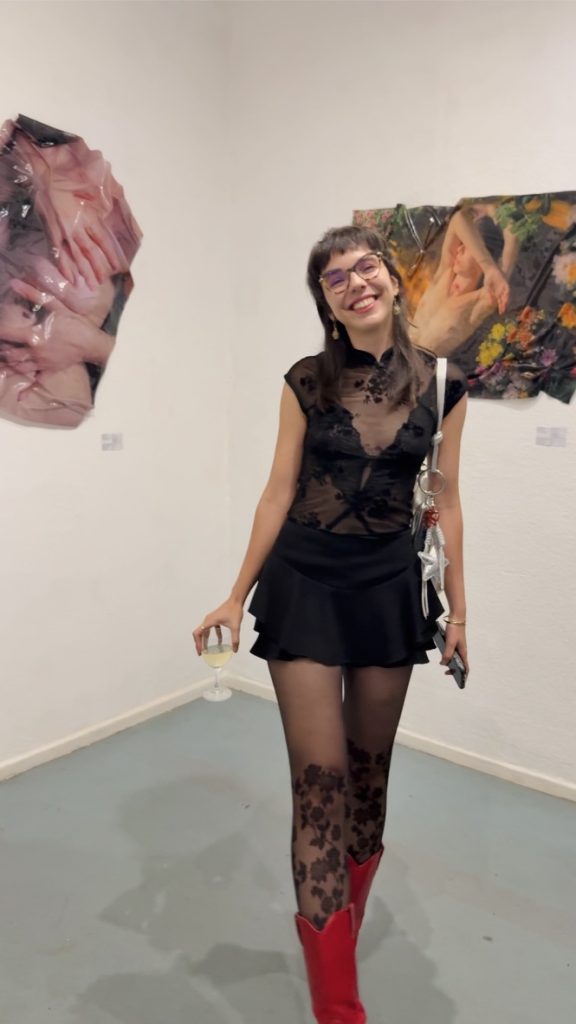
Connecting with the audience in Berlin was amazing, particularly seeing so many young people show up from the promotional campaign. What struck me was how effortlessly people tapped into the core themes. They didn’t rush to analyze the work instantly; they allowed themselves to exist in that tension between beauty and unease. It was incredible to watch people navigate that friction between the beautiful and the uncomfortable.
The rationalization only comes after that initial, visceral moment. You interact with the piece first, and only then do you step back and think, “Wait, is it this? Am I reading this right?” That’s the exact moment the real conversation begins.
Jana: Related to this, I would like to cite a short paragraph of Anna Frangovska’s curatorial text about your exhibition.
“She reveals intimacy as a material condition. Beautiful and unsettling, tender and violent, erotic and banal, clean and unclean. (…) So my question is, do the disturbing part and the aesthetic part have to be equal in an artwork, or should one of them dominate?”
Ana: It shifts depending on the scene, but generally, I keep them in equal balance. The visual rendering pulls you in with that hyper-aesthetic polish, while the actual content hits you with the grotesque such as a headless fish or spilled coffee, things that are chaotic and unclean. By physically piercing through the textiles, I’m carrying that exact same tension into the medium, so the beauty and the disturbance coexist constantly.
Jana: Yeah, there are small metal eyelets in different places on the textile photographs, or the shiny pieces you put on the pulse points.
Ana: There are pins holding them, too, and how I treat each piece really depends on its individual nature, each work stands on its own. Some scenes are much softer and tender, even if they still feel a little uncanny. And there’s this constant sense of dualism surrounding all of them, because dualism is so deeply rooted in our tradition and everyday lives. So every piece develops its own distinct character, and ultimately, all of those contrasting elements collide into one cohesive body.
Jana: This type of art usually makes people reflect afterwards, as if something deep inside them has been touched and can finally begin to heal. …..Or they face some of their fears that arise in the same environment.
Ana: Yes and honestly, that’s the beauty of it. Because in a way, it wakes up a part of yourself that you’ve consciously or subconsciously put to sleep.
Jana: But it still exists.
Jana: It’s like watching some movies by Lanthimos or Aronofsky. You walk out of the cinema a bit confused, but the next day you feel relieved or rested, because something has healed inside.
Ana: Exactly, that’s why I’m saying, the rationalizing part and the intellectualizing part comes after.
Jana: In the moment you are overwhelmed with all kinds of different feelings…
Ana: Yes, that’s my philosophy not only for this show, but across my entire practice. I want you to step inside the work and feel immersed in it, instead of trying to decode it from a distance.
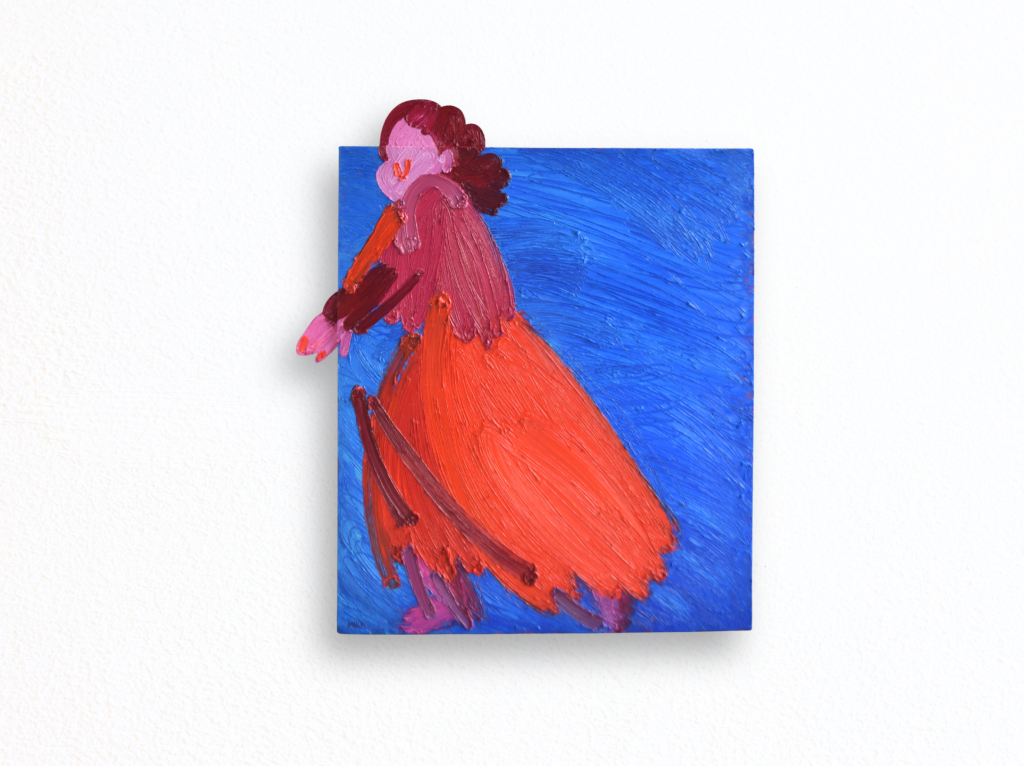
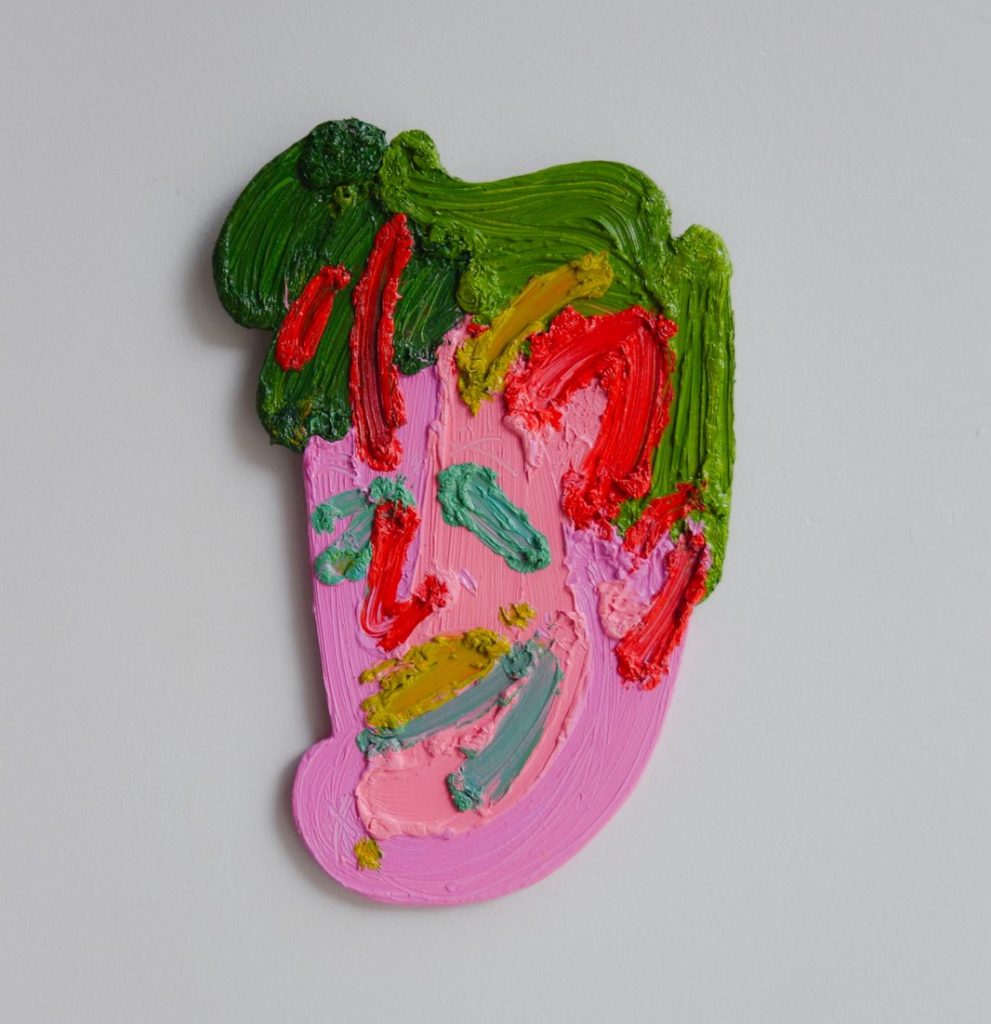
Jana: That also happened at your first solo exhibition, “Diversus”, when you and your friends wore clothes in which you felt both comfortable and uncomfortable. They were beautiful black-and-white photographs with painted interventions.
Ana: You really can’t separate the two. If you only lean into pure beauty and aesthetics, you just end up adding to a culture already oversaturated with fakeness, things engineered to look the way social constructs dictate they should.
We need to speak more openly about the raw truth of how we move through our everyday routines. Even the smallest, imperfect gesture like standing there making coffee and letting it boil over holds weight and meaning for me.
Jana: That’s a good point. I am really looking forward to seeing how the audience will experience this exhibition at the Centar Jadro, which we are organizing together, and hopefully it will impact people as strongly as it did in Berlin.
Ana: I hope so, I am really looking forward to it.